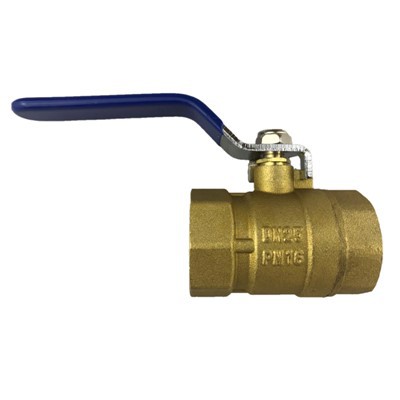
When it comes to fluid control in various industrial and commercial applications, the choice of valve can significantly impact system performance. One type of valve that often comes under consideration is the brass globe valve. As a supplier of brass globe valves, I'm frequently asked whether these valves provide good flow control. In this blog, I'll delve into the features, advantages, and limitations of brass globe valves in the context of flow control to help you make an informed decision.
Understanding Brass Globe Valves
Brass globe valves are a type of linear motion valve that use a plug (disk) attached to a stem to regulate the flow of fluid through a system. The valve body has a spherical shape, with an internal baffle that separates the inlet and outlet ports. The disk can be raised or lowered by turning the valve stem, which controls the amount of fluid that can pass through the valve.
One of the key features of brass globe valves is their ability to provide precise flow control. The linear motion of the disk allows for a smooth and gradual adjustment of the flow rate, making them suitable for applications where precise regulation is required. Additionally, brass globe valves can be fully closed to stop the flow completely, providing a tight shut-off.
Advantages of Brass Globe Valves for Flow Control
Precise Regulation
As mentioned earlier, the linear motion of the disk in a brass globe valve allows for precise control of the flow rate. This makes them ideal for applications where accurate flow adjustment is necessary, such as in chemical processing, water treatment, and HVAC systems. For example, in a chemical processing plant, a brass globe valve can be used to control the flow of reactants into a reactor vessel, ensuring that the chemical reactions occur at the desired rate.
Good Throttling Capability
Brass globe valves are also known for their excellent throttling capability. Throttling refers to the ability of a valve to control the flow rate by partially opening or closing the valve. The design of the brass globe valve allows for a wide range of flow rates to be achieved, from almost fully closed to almost fully open. This makes them suitable for applications where the flow rate needs to be adjusted over a large range, such as in a water distribution system where the flow rate may vary depending on the demand.
Tight Shut-Off
Another advantage of brass globe valves is their ability to provide a tight shut-off. When the valve is fully closed, the disk seats against the valve seat, creating a seal that prevents the flow of fluid. This is important in applications where leakage can cause safety hazards or damage to the system. For example, in a gas pipeline, a brass globe valve can be used to shut off the flow of gas in case of an emergency.
Durability
Brass is a durable material that is resistant to corrosion and wear. This makes brass globe valves suitable for use in a wide range of environments, including those with high temperatures, pressures, and corrosive fluids. Additionally, brass globe valves are relatively easy to maintain, which can help reduce downtime and maintenance costs.
Limitations of Brass Globe Valves for Flow Control
High Pressure Drop
One of the main limitations of brass globe valves is their relatively high pressure drop. The internal baffle in the valve body creates a resistance to the flow of fluid, which can cause a significant pressure drop across the valve. This can be a problem in applications where the pressure drop needs to be minimized, such as in a pipeline system with a limited pressure supply.
Limited Flow Capacity
Brass globe valves also have a limited flow capacity compared to some other types of valves, such as ball valves and gate valves. The design of the valve body and the disk restricts the flow of fluid, which can limit the maximum flow rate that can be achieved. This can be a problem in applications where a high flow rate is required, such as in a large water distribution system.
Slow Operation
Another limitation of brass globe valves is their relatively slow operation. The linear motion of the disk requires a significant amount of force to open and close the valve, which can make the operation time-consuming. This can be a problem in applications where a quick response is required, such as in an emergency shut-off situation.
Comparing Brass Globe Valves with Other Types of Valves
To better understand the flow control capabilities of brass globe valves, it's helpful to compare them with other types of valves commonly used in industrial and commercial applications.
Brass Ball Valve
Brass ball valves are a type of quarter-turn valve that use a spherical ball with a hole in the center to control the flow of fluid. When the valve is open, the hole in the ball aligns with the inlet and outlet ports, allowing fluid to flow through the valve. When the valve is closed, the ball is rotated 90 degrees, blocking the flow of fluid.
Compared to brass globe valves, brass ball valves have a lower pressure drop and a higher flow capacity. This makes them suitable for applications where a high flow rate and low pressure drop are required, such as in a pipeline system with a large diameter. However, brass ball valves are not as precise as brass globe valves in terms of flow control, and they do not provide as tight a shut-off.
Stainless Steel Ball Valve
Stainless steel ball valves are similar to brass ball valves, but they are made of stainless steel, which provides better corrosion resistance and durability. Stainless steel ball valves are commonly used in applications where the fluid being controlled is corrosive or where the valve needs to withstand high temperatures and pressures.
Like brass ball valves, stainless steel ball valves have a lower pressure drop and a higher flow capacity than brass globe valves. However, they also have the same limitations in terms of flow control precision and shut-off tightness.
Stainless Steel Gate Valve
Stainless steel gate valves are a type of linear motion valve that use a flat gate to control the flow of fluid. When the valve is open, the gate is lifted up, allowing fluid to flow through the valve. When the valve is closed, the gate is lowered down, blocking the flow of fluid.
Compared to brass globe valves, stainless steel gate valves have a lower pressure drop and a higher flow capacity. They are also suitable for applications where a large flow rate is required, such as in a water treatment plant or a power generation facility. However, stainless steel gate valves are not as precise as brass globe valves in terms of flow control, and they can be more difficult to operate and maintain.
Brass Y Strainer and Stainless Steel Y Strainer
Brass Y strainers and stainless steel Y strainers are not valves, but they are often used in conjunction with valves to protect the system from debris and contaminants. Y strainers are designed to remove solid particles from the fluid stream, which can help prevent damage to the valves and other components in the system.
While Y strainers do not directly control the flow of fluid, they can have an impact on the performance of the valves in the system. For example, if a Y strainer becomes clogged with debris, it can cause a pressure drop across the strainer, which can affect the flow rate and the performance of the valves downstream.


Conclusion
In conclusion, brass globe valves can provide good flow control in many applications, especially those where precise regulation, good throttling capability, and tight shut-off are required. However, they also have some limitations, such as a relatively high pressure drop, limited flow capacity, and slow operation. When choosing a valve for a specific application, it's important to consider the requirements of the system, including the flow rate, pressure, temperature, and fluid characteristics, as well as the advantages and limitations of different types of valves.
As a supplier of brass globe valves, I'm committed to providing high-quality products and excellent customer service. If you have any questions or need assistance in selecting the right valve for your application, please don't hesitate to contact us. We'll be happy to help you make an informed decision and ensure that your system operates smoothly and efficiently.
References
- Crane Valve Handbook
- Valve Manufacturers Association (VMA) Standards
- ASME B16.34 - Valves - Flanged, Threaded, and Welded End