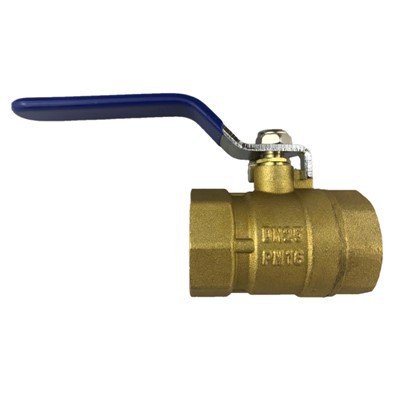
Can brass gate valves be automated? Well, that's a question I get asked a lot as a brass gate valve supplier. In this blog post, I'm gonna dive deep into this topic and give you all the details you need to know.
First off, let's talk about what brass gate valves are. They're a type of valve used to control the flow of fluids in a pipeline. The gate inside the valve moves up and down to either allow or block the fluid passage. Brass is a popular material for these valves because it's corrosion - resistant, durable, and has good mechanical properties. You can check out our Brass Gate Valve product page for more info on the ones we offer.
Now, the big question: can they be automated? The answer is a resounding yes! Automating brass gate valves is not only possible but has become increasingly common in many industries. There are several reasons why you might want to automate these valves.
One of the major benefits is improved control. With an automated system, you can precisely control the opening and closing of the valve. This is super important in applications where you need to regulate the flow rate accurately. For example, in a chemical processing plant, even a small change in the flow of chemicals can have a big impact on the final product. Automated brass gate valves can help maintain the exact flow rate required.
Another advantage is increased efficiency. Manual operation of valves can be time - consuming and prone to human error. By automating the process, you can reduce the time it takes to open and close the valve and ensure consistent operation. This can lead to significant savings in labor costs and improved productivity.
Safety is also a crucial factor. In some industrial settings, operating valves manually can be dangerous. For instance, in a high - pressure pipeline, getting too close to a valve during operation can put workers at risk. Automated valves can be operated from a safe distance, minimizing the potential for accidents.
So, how do you automate a brass gate valve? There are a few common methods. One of the most popular is using electric actuators. These actuators are powered by electricity and can be controlled remotely. They're relatively easy to install and can be programmed to open or close the valve at specific times or in response to certain conditions.
Another option is using pneumatic actuators. These are powered by compressed air. Pneumatic actuators are known for their fast operation and high force output. They're often used in applications where quick valve movement is required, such as emergency shut - off systems.
Hydraulic actuators are also an option for automating brass gate valves. They use hydraulic fluid to generate the force needed to move the valve. Hydraulic actuators are suitable for heavy - duty applications where a large amount of force is required to operate the valve.
When considering automating a brass gate valve, there are a few things you need to keep in mind. First, you need to make sure the actuator you choose is compatible with the valve. The size, torque, and operating conditions of the valve all need to be taken into account.
You also need to think about the control system. You'll need a way to send commands to the actuator to open and close the valve. This could be a simple switch, a programmable logic controller (PLC), or a more advanced computer - based control system.
Let's compare brass gate valves with some other types of valves in terms of automation. Take the Brass Globe Valve for example. Globe valves are great for throttling applications, but they can be a bit more difficult to automate compared to gate valves. That's because the flow path in a globe valve is more complex, and the actuator needs to be able to control the position of the disc more precisely.
Brass Ball Valve is another popular type of valve. Ball valves are known for their quick - opening and closing action. They're relatively easy to automate, but they might not be as suitable as gate valves for applications where a large flow area is required.
Stainless Steel Ball Valve is similar to the brass ball valve in terms of operation, but it offers better corrosion resistance in some environments. However, when it comes to automation, the principles are pretty much the same as for brass ball valves.
If you're working in a system where you need to filter out debris, you might also be interested in the Stainless Steel Y Strainer. While it's not a valve, it can be an important part of a fluid handling system.
Automating brass gate valves has its challenges too. One of the main challenges is the cost. The actuators and control systems can be quite expensive, especially for high - end models. You also need to factor in the cost of installation and maintenance.


Another challenge is the complexity of the system. An automated valve system requires proper programming and setup. If something goes wrong, troubleshooting can be more difficult compared to a manual valve.
In conclusion, brass gate valves can definitely be automated, and there are many good reasons to do so. Whether it's for improved control, efficiency, or safety, an automated brass gate valve can be a great addition to your fluid handling system. If you're considering automating your valves or just want to learn more about our brass gate valves, we're here to help. Don't hesitate to reach out to us for a consultation and let's discuss how we can meet your specific needs. We can talk about the best actuator for your valve, the right control system, and all the other details.
References:
- "Valve Handbook" - General knowledge about different types of valves and their applications.
- "Industrial Automation Guide" - Information on the automation of industrial equipment, including valves.