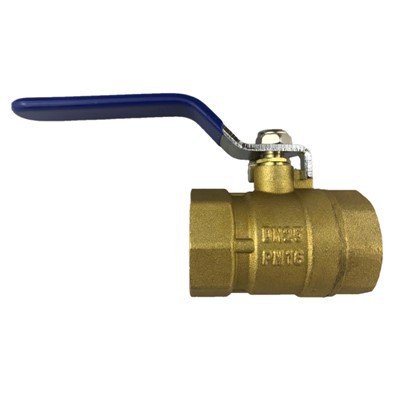
Hey there! As a supplier of brass gate valves, I often get asked, "What's the function of a brass gate valve?" Well, let's dive right in and explore this topic.
Basic Function of a Brass Gate Valve
At its core, a brass gate valve is a type of valve used to control the flow of a fluid, usually water, gas, or steam, through a pipeline. The main function is to either allow the full flow of the fluid or completely stop it. It does this by using a gate - a flat or wedge - shaped disc that can be raised or lowered inside the valve body.
When the gate is fully raised, it creates an unobstructed passage through the valve, allowing the fluid to flow freely with minimal resistance. This is great for applications where you need a high - volume, unrestricted flow, like in water distribution systems for large buildings or industrial processes.
On the flip side, when the gate is fully lowered, it seals against the valve seats, blocking the flow of the fluid completely. This is useful for shutting off the supply of fluid for maintenance, repairs, or in case of an emergency.
Advantages of Using Brass Gate Valves
One of the big advantages of brass gate valves is their durability. Brass is a strong and corrosion - resistant material, which means these valves can last for a long time, even in harsh environments. They can handle a wide range of temperatures and pressures, making them suitable for many different applications.
Another advantage is their low - pressure drop. Since the gate, when fully open, provides a straight - through path for the fluid, there's very little resistance to the flow. This results in less energy loss, which can save money in the long run, especially in large - scale systems.


Brass gate valves are also relatively easy to operate. You just need to turn the valve stem, either manually or with an actuator, to raise or lower the gate. This simplicity makes them a popular choice for many users.
Applications of Brass Gate Valves
Water Supply Systems
In residential, commercial, and industrial water supply systems, brass gate valves are commonly used. In a house, you might find them at the main water supply line to shut off the water in case of a leak or for plumbing repairs. In a large commercial building, they can control the flow of water to different sections of the building, such as floors or individual units.
Irrigation Systems
For agricultural and landscaping irrigation systems, brass gate valves are essential. They can be used to control the flow of water to different fields or areas of a garden. This allows for efficient water distribution and helps prevent over - watering.
Industrial Processes
In industries like chemical processing, food and beverage production, and power generation, brass gate valves play a crucial role. They can control the flow of various fluids, including chemicals, steam, and cooling water. For example, in a chemical plant, a brass gate valve might be used to shut off the flow of a hazardous chemical in case of an emergency.
Comparison with Other Types of Valves
Brass Globe Valve
A Brass Globe Valve is another type of valve commonly used in fluid control systems. Unlike a brass gate valve, which provides a straight - through flow when open, a brass globe valve has a more complex flow path. It's better at regulating the flow rate precisely, but it has a higher pressure drop compared to a brass gate valve. So, if you need accurate flow control, a brass globe valve might be a better choice, but if you need a valve for on - off service with low resistance, a brass gate valve is preferable.
Brass Air Release Valve
The Brass Air Release Valve has a different function altogether. Its main job is to release air from a pipeline. Air in a pipeline can cause problems like reduced flow efficiency and water hammer. A brass air release valve automatically releases the air as it accumulates in the system. In contrast, a brass gate valve is mainly for controlling the flow of the main fluid, not for dealing with air.
Stainless Steel Gate Valve
A Stainless Steel Gate Valve is similar in function to a brass gate valve, but it's made of stainless steel instead of brass. Stainless steel is even more corrosion - resistant than brass, especially in highly corrosive environments like seawater applications. However, brass gate valves are often more cost - effective and are suitable for many general - purpose applications.
Maintenance of Brass Gate Valves
To keep your brass gate valves in good working condition, regular maintenance is important. You should check the valve for any signs of leakage around the packing or the valve body. If there's a leak, you might need to tighten the packing or replace it if it's worn out.
It's also a good idea to operate the valve periodically, even if it's not in regular use. This helps prevent the gate from sticking due to rust or debris buildup. You can lubricate the valve stem to ensure smooth operation.
Why Choose Our Brass Gate Valves
As a supplier of brass gate valves, we take pride in offering high - quality products. Our valves are made from top - grade brass, ensuring long - lasting performance and reliability. We have a wide range of sizes and specifications to meet different customer needs.
Whether you're a homeowner looking for a simple valve for your water supply or an industrial client in need of a large - scale valve for your manufacturing process, we've got you covered. Our team of experts can also provide technical support and advice to help you choose the right valve for your application.
Let's Connect
If you're interested in our brass gate valves or have any questions about their functions, applications, or installation, don't hesitate to get in touch. We're here to assist you with all your valve - related needs. Whether you're planning a new project or need to replace an existing valve, we can offer the right solutions.
References
- Valve Handbook, 4th Edition, CRC Press
- Fluid Mechanics and Thermodynamics of Turbomachinery, S. L. Dixon
- Industrial Valves: Selection, Specification, and Installation, McGraw - Hill Professional