What is the noise level when a Resilient Seat Gate Valve is operating?
As a supplier of Resilient Seat Gate Valves, I often encounter inquiries from customers regarding various aspects of these valves, and one question that frequently comes up is about the noise level during their operation. Understanding the noise level of a Resilient Seat Gate Valve is crucial for many industrial applications where noise can be a significant concern, either for the safety and comfort of workers or for regulatory compliance.
Factors Affecting the Noise Level of Resilient Seat Gate Valves
The noise generated by a Resilient Seat Gate Valve during operation is influenced by several factors. Firstly, the flow rate of the fluid passing through the valve plays a major role. When the flow rate is high, the fluid exerts more force on the valve components, causing vibrations and turbulence. These vibrations can then be transmitted through the valve body and the surrounding pipes, resulting in increased noise. For example, in a large - scale water supply system where high - volume water needs to be transported, the Resilient Seat Gate Valve may experience high - velocity flows, which can lead to louder operation.
The pressure difference across the valve is another significant factor. A large pressure differential can cause the fluid to rush through the valve opening more forcefully, creating cavitation in some cases. Cavitation occurs when the local pressure in the fluid drops below the vapor pressure, causing the formation and subsequent collapse of vapor bubbles. The collapse of these bubbles generates shock waves that can produce a loud noise, similar to the sound of gravel being shaken in a can.
The design and construction of the valve itself also impact the noise level. A well - designed Resilient Seat Gate Valve with smooth internal surfaces and proper sealing mechanisms can minimize turbulence and fluid - related noise. For instance, valves with a streamlined gate design can reduce the resistance to fluid flow, thereby decreasing the likelihood of excessive noise generation. Additionally, the quality of the materials used in the valve construction can affect its noise performance. High - quality materials that can dampen vibrations and resist wear and tear are more likely to result in quieter operation.
Measuring the Noise Level
To accurately determine the noise level of a Resilient Seat Gate Valve during operation, specialized equipment is required. Sound level meters are commonly used to measure the noise intensity in decibels (dB). These meters are calibrated to measure sound pressure levels and can provide a quantitative assessment of the noise produced by the valve.
When measuring the noise level, it is important to consider the operating conditions. The valve should be tested under normal operating pressures, flow rates, and fluid temperatures. The measurement should also be taken at a specific distance from the valve and in an environment that minimizes background noise. For example, in an industrial setting, the measurement may be taken at a distance of 1 meter from the valve body, and the background noise should be subtracted from the total measured noise to obtain the actual noise level generated by the valve.
Typical Noise Levels of Resilient Seat Gate Valves
In general, the noise level of a Resilient Seat Gate Valve during normal operation can range from 50 dB to 80 dB. At lower flow rates and pressure differentials, the noise level is typically on the lower end of this range, around 50 - 60 dB. This is comparable to the noise level of normal conversation in a quiet room. As the flow rate and pressure difference increase, the noise level can rise to 70 - 80 dB, which is similar to the noise level of a busy office or a moderate - traffic street.

However, it is important to note that these are just general estimates, and the actual noise level can vary depending on the specific valve design, size, and operating conditions. Some high - performance Resilient Seat Gate Valves may be designed to operate at even lower noise levels, especially those that are used in applications where noise reduction is a top priority, such as in hospitals or residential areas.
Noise Reduction Strategies
If the noise level of a Resilient Seat Gate Valve is a concern, there are several strategies that can be employed to reduce it. One approach is to optimize the valve selection. Choosing a valve with a larger size can help reduce the flow velocity and pressure drop, thereby minimizing noise generation. For example, if a smaller - sized valve is causing excessive noise due to high - velocity flows, upgrading to a larger valve may solve the problem.
Another strategy is to install noise - reducing devices, such as silencers or vibration dampers. Silencers can be installed in the pipeline near the valve to absorb and dissipate the sound energy. Vibration dampers, on the other hand, can be attached to the valve body or the pipes to reduce the transmission of vibrations, which in turn reduces the noise level.
In addition, proper installation and maintenance of the valve are essential for noise reduction. Ensuring that the valve is correctly aligned and securely mounted can prevent unnecessary vibrations. Regular maintenance, including checking for worn - out components and proper lubrication, can also help keep the valve operating smoothly and quietly.
Our Resilient Seat Gate Valves and Noise Performance
As a supplier, we are committed to providing Resilient Seat Gate Valves with excellent noise performance. Our valves are designed with advanced engineering techniques to minimize turbulence and fluid - related noise. We use high - quality materials that can effectively dampen vibrations and resist wear and tear, ensuring long - term quiet operation.
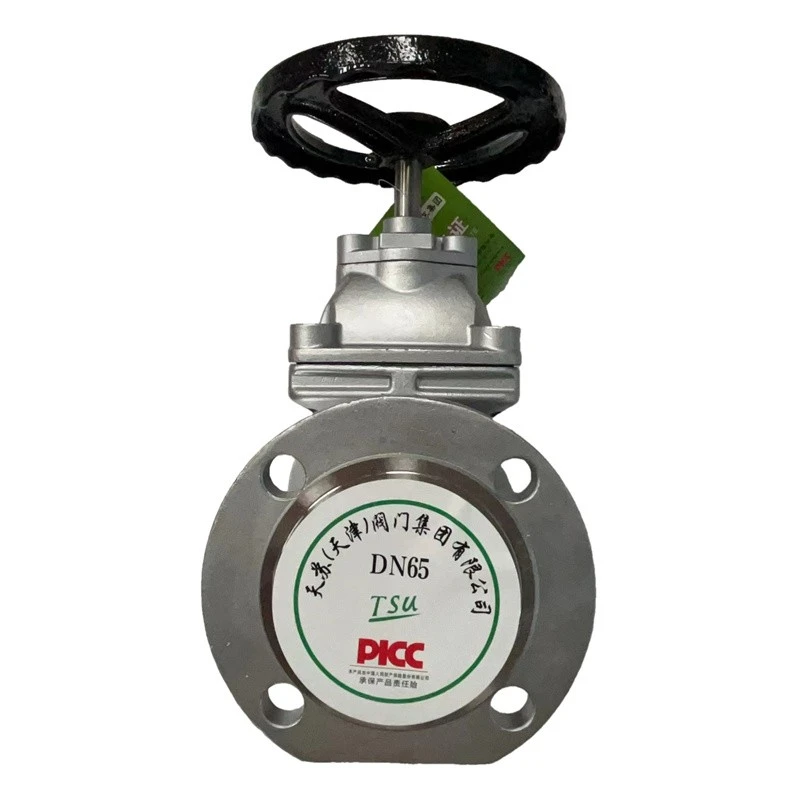
We offer a wide range of Resilient Seat Gate Valves, including Resilient Seat Gate Valve, Stainless Steel Flanged Gate Valve, and Mechanical Locking Gate Valve. Each of these valves is carefully tested to meet strict noise level standards. Whether you need a valve for a small - scale water supply system or a large - scale industrial application, we can provide you with a solution that meets your noise requirements.
If you are interested in learning more about our Resilient Seat Gate Valves or have any questions regarding their noise performance, we encourage you to contact us for a detailed discussion. Our team of experts is ready to assist you in selecting the most suitable valve for your specific needs and to provide you with all the necessary technical support.
References
- ASME B16.34 - Valves - Flanged, Threaded, and Welding End.
- API 600 - Steel Gate Valves - Flanged and Butt Welding Ends.
- ISO 5208 - Industrial Valves - Pressure Testing.