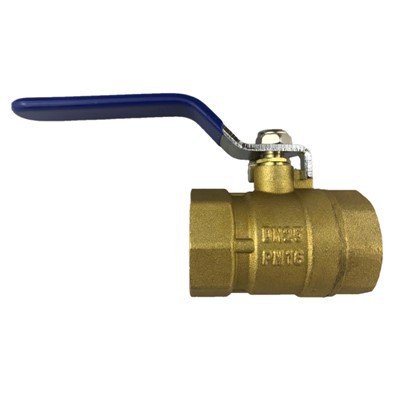
Let's talk about whether a brass ball valve can be used in the cement industry. As a supplier of brass ball valves, I've had a fair share of customers asking this very question. So, I thought I'd share my insights based on my experience and some good - old research.
First off, let's understand what a brass ball valve is. It's a type of valve that uses a hollow, perforated, and pivoting ball to control flow through it. When the ball's hole is in line with the flow direction of the fluid or gas, the valve is open. When it's rotated 90 degrees, the valve is closed. Brass, the material used to make these valves, is an alloy of copper and zinc. It's known for its corrosion resistance, malleability, and relatively low cost compared to some other metals.
Now, let's dive into the cement industry. The cement industry is a tough environment. There are high temperatures, abrasive materials, and often aggressive chemicals involved in the production process. Cement production involves several stages, from raw material extraction to the final product. At each stage, different types of valves are needed to control the flow of various substances like water, air, and cement powder.
One major concern in using a brass ball valve in the cement industry is the abrasion factor. Cement powder is extremely abrasive. When it flows through a valve, it can wear down the internal components of the valve over time. Brass, although relatively hard, may not be as resistant to abrasion as some other materials. For example, Stainless Steel Ball Valve is often more abrasion - resistant due to the properties of stainless steel. However, brass ball valves can still be used in areas where the flow of cement powder is not too high or where there is a lower risk of abrasion.
Another aspect to consider is the temperature. Cement production involves high - temperature processes. Brass has a relatively low melting point compared to some other metals. In areas where the temperature is extremely high, brass ball valves may not be suitable. They could deform or lose their integrity under such extreme heat. But in parts of the cement plant where the temperature is more moderate, like in the water supply lines for cooling systems or in some low - temperature air handling systems, brass ball valves can work just fine.
The corrosion factor also plays a role. In the cement industry, there are often chemicals present that can cause corrosion. While brass is corrosion - resistant to a certain extent, in highly corrosive environments, it may not hold up as well as Stainless Steel Gate Valve. However, if the environment is not too aggressive, brass ball valves can provide a good level of corrosion resistance.
Let's talk about the advantages of using brass ball valves in the cement industry. One of the biggest advantages is their cost - effectiveness. Brass is less expensive than many other metals used in valve manufacturing. For smaller cement plants or for less critical applications within a larger plant, using brass ball valves can save a significant amount of money. They are also relatively easy to install and maintain. Their simple design means that they can be quickly repaired if something goes wrong.


Brass ball valves also offer good sealing performance. The ball design provides a tight seal when closed, which is important in preventing leaks. In a cement plant, leaks can lead to a loss of materials, which is not only wasteful but can also create safety hazards.
However, it's not all rosy. As mentioned earlier, their limitations in terms of abrasion and high - temperature resistance mean that they may not be suitable for all applications in the cement industry. For critical processes where reliability and long - term performance are crucial, other types of valves like Stainless Steel Ball Valve or Brass Gate Valve might be a better choice.
So, can a brass ball valve be used in the cement industry? The answer is yes, but with some caveats. They can be used in non - critical applications, areas with lower temperatures, and where the risk of abrasion is relatively low. They offer a cost - effective and easy - to - maintain solution for certain parts of the cement production process.
If you're in the cement industry and are considering using brass ball valves, I'd be more than happy to have a chat with you. I can provide more detailed information about the suitability of our brass ball valves for your specific needs. Whether you need a valve for a small water line or for a less - critical air - handling system, we can guide you through the selection process. Feel free to reach out to discuss your requirements and see if our brass ball valves are the right fit for your cement plant.
References
- Engineering handbooks on valve materials and properties
- Industry reports on the application of different valves in the cement industry